

Old houses have a kind of honesty modern ones often lack — solid walls, deep reveals, the satisfying weight of a door that shuts properly. But they weren’t built for the way we live now. They’re darker, more divided, and often inefficient. The real skill lies in upgrading them for modern life without sanding away the charm that made them special to begin with.
Respecting What’s Already There
Every good transformation starts with restraint. Before you think about extending or remodelling, it’s worth understanding what gives the house its rhythm — the spacing of the windows, the pitch of the roof, the way light moves through each room.
In many period terraces, the temptation is to open everything up. But keeping certain elements — chimney breasts, ceiling heights, original sill lines — maintains balance. When new work follows the same proportions, a home can feel brighter and more open without losing its roots.
Making the New Work Belong
A successful extension doesn’t have to mimic the old, but it should understand it. Matching bricks helps, but matching scale and proportion matters far more.
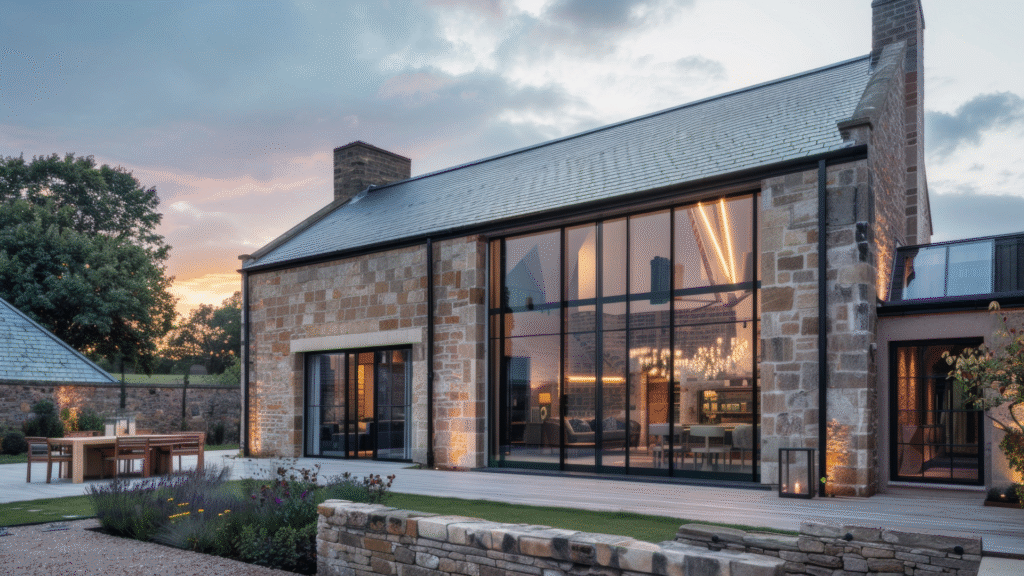
Take a typical Yorkshire cottage: small vertical windows, thick stone walls, and a steep roof. A modern rear addition with dark timber cladding or slim aluminium glazing can still fit perfectly if it keeps the same roof pitch and window rhythm. Side by side, the two read as one composition rather than a clash of styles.
Where Contrast Works
Sometimes, contrast does the heavy lifting. Clean glass and metal can make traditional stone or brick look stronger. The key is intent.
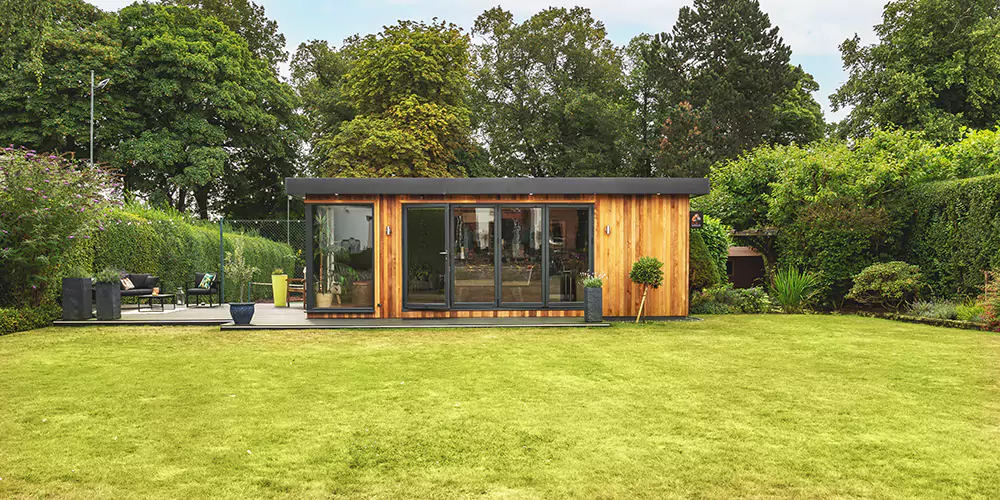
A lightweight glass link between an older house and a new garden room, for example, lets each part stand in its own right — the old retains its solidity, the new its precision. The contrast works because it’s deliberate, not decorative. Simplicity is what makes it believable.
Bringing Light Into Old Spaces
Older houses were designed around smaller windows and internal walls, so they can feel enclosed. The fix isn’t always more glass; it’s smarter light.
A narrow rooflight over a worktop can change a kitchen more than a full glass wall. Internal windows or glazed doors can pull daylight through the plan without upsetting the structure. Even small moves — raising a ceiling line slightly or aligning a new opening with an existing one — can transform the way a space feels.
Keeping the Character While Updating the Function
Modern living needs better flow, storage, and comfort, but the charm of an old home comes from texture and depth.
Pair a clean-lined kitchen with an exposed brick wall, or fit modern cabinetry against limewashed plaster. Let materials do the talking — timber that shows grain, metal that ages naturally, plaster that stays matte. These surfaces bridge time without shouting about it. They make new work feel grounded instead of glossy.
Designing for Time, Not Fashion
The best homes don’t chase trends; they’re built on proportion and practicality. Over-glazed boxes and on-trend cladding fade fast. A simple, well-balanced extension — maybe a pale render against traditional brick, or slim glazing beneath a slate roof — stays current because it belongs to the house, not a style moment.
When modern work follows the same quiet confidence as the original building, it ages just as gracefully.
The most successful modernisations don’t erase history; they extend it. When you can’t tell where the old house ends and the new begins, it doesn’t feel like a renovation — it feels like the home simply evolved.
Thinking about updating an older home?
At Nexus North Yorkshire, we specialise in design-led construction that brings modern performance to traditional homes — extensions, refurbishments, and full reconfigurations built to last. If you want a home that feels both timeless and new, we know how to get the balance right.
www.nexusny.co.uk | 01723 3133244 | info@nexusny.co.uk